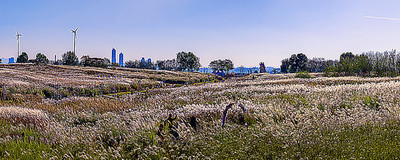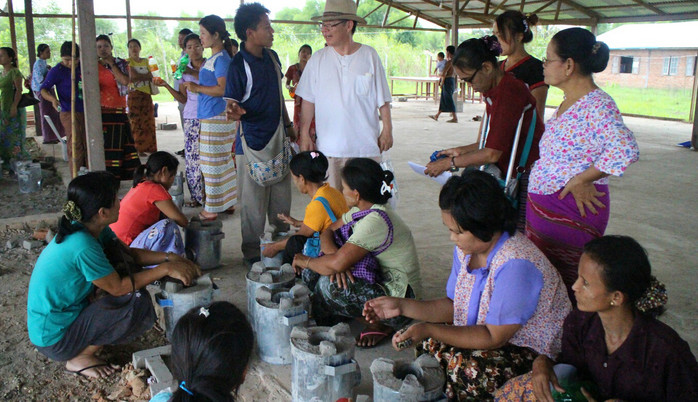
A small miracle was created in the village Jico Hmawbi, Myanmar. UNEP Eco-Peace Leadership Center (hereinafter EPLC) provided the villagers with mere $9 worth of portable braziers.
Afterward the residents (including children) could be able to become free from chronic stomachache as they came to be able to boil water to drink with the braziers. That is not everything. Thanks to the braziers, they have contributed to forest protection and environment protection – the use of trees as firewood decreased by 40% - and the residents' hygiene and quality of life have improved.
In addition, the students from the Asia-Pacific area who participated in the project as mentees are studying on scholarship at the Kangwon National University Graduate School, only Korean graduate school that currently has the Department of Forests, and they say that they have the dream of disseminating Korea's technology for restoring forests - Korea has one of the world’s top three technologies for restoring forests - to their countries.
9 Dollar Portable Brazier, ‘The Butterfly Effect’ of a Small Power
The small power is bringing the butterfly effect even to Korea. The local environment group 'Green Cheonan 21' applied for the program for drawing a map that shows the air pollution level in the Cheonan area, and received 1 year support. At present the program is conducted consistently after its performance was recognized and the program was selected as a multi-annual program (3 years).
The program that the group is participating in is a project for checking the air pollution level for one year after installing equipment in around the main 60 spots in Cheonan-si - data, such as the air pollution level, trend of increase in the traffic of public transportation vehicles, status of the number of automobiles, changes in the nearby trees, is collected by area in the city.
Especially, the program participation rate of the local residents is high - the middle school and high school students participate under their own names - and it receives highly positive evaluation on the educational effect on the students.
In addition, EPLC is to export paper brick making technology to Mongolia by supporting the transfer of the appropriate technology of GongGam Cooperative based in Incheon to foreign nations. The cooperative is currently pushing forward establishment of a children's library made of paper bricks in Ulan Baator, Mongolia.
These achievements have sprouted from financial support from UNEP-EPLC. UNEP-EPLC is planning to publicize the results domestically and overseas through side events of Asia Pacific Environment Forum 2014 and the Twelfth Meeting of the Conference of the Parties to the Convention on Biological Diversity.
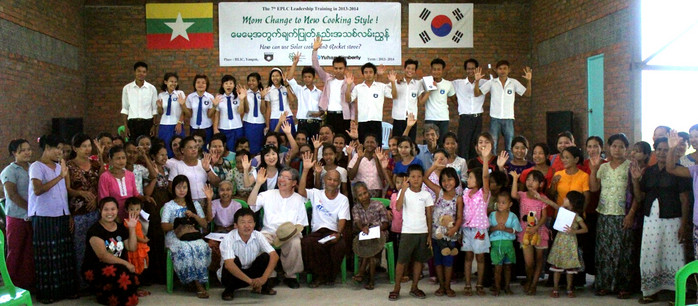
Support for EPLC Educational Program for Tackling Environmental Problems and Eradicating Poverty in the Asia-Pacific Area
EPLC is a UNEP-affiliated NGO founded in 2006 for establishing ecological peace as well as solving poverty and environmental problems in the area. It has carried out the educational project for solving environmental problems in the area and is preparing the 7th Asia Pacific Environment Forum this year as well in mutual cooperation with UNEP Regional Office for Asia and the Pacific, Korea Green Foundation, Kangwon National University, Yuhan-Kimberly.
A total of 126 people from 18 nations in the area have participated in the EPL educational program since the first year of the program, 2006. This year, as in other years, 15 people are endeavoring to tackle the environmental problems and eradicate poverty in each country.
The program, a short-term program (1 year), selects 5 Korean mentees (fellows) and 10 foreign mentees (fellows) - the foreign mentees from the Asia-Pacific area - every year. It consists of a total of 6 categories - climate change, disaster prevention and conflict resolution, ecosystem management, construction of environmental governance, disposal of noxious substances and waste materials, resource efficiency and sustainable consumption and production. The types of the project are divided into education and training project, campaign project, direct project, research project.
Jin Woon Yang, the secretary general, said, "Around 80 domestic experts in various fields, such as environment, forests, international development and cooperation, climate change, participate in the EPL educational program as mentors.", adding "The selected mentees receive the project expenses and one-to-one mentoring with the experts for one year."
Both face-to-face mentoring and online mentoring are carried out simultaneously and direct instructions are provided through the experts' on-the-spot visit. In addition, the selected mentees are invited to the Asia Pacific Environment Forum to be offered an opportunity to strengthen mutual capabilities by networking with various environmental experts from the area. After the project outcome evaluation, a mentee who receives excellent marks is awarded the Minister of the Environment Award and a small activity grant.
Basically, it is a one year support program; but a multi annual support can be possible, depending on the project outcome. This year, as in other years, many young activists from the area applied for the program, and EPLC is currently in the process of selection of mentees. The competition rate is around one out of three. Being able to communicate in English is the first requirement and extra points are added for female applicants.
The secretary general says "As for my country the male/female applicant ratio is 7:3, few female applicants, but as for East Asian countries, such as Indonesia and so on, there are many female applicants. Although females in the Asia Pacific area are given limited educational opportunities, the applicants' English ability is amazing.", adding that in spite of that it is desperate to develop female human resources due to a low percentage of females at management level.
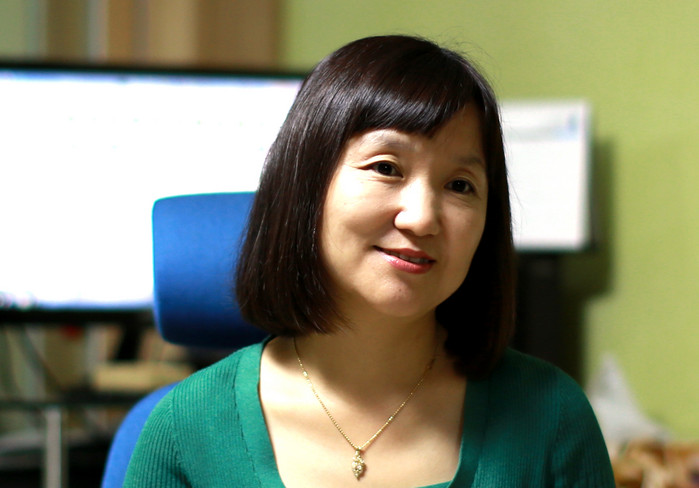 |
| △ Jin Woon Yang, EPLC Secretary General |
Desperate for Sponsorship, but Company's Reason for Supporting must Correspond to EPLC's Philosophy.
She said about this achievement, "ELPC does not focus on simply sponsoring project expenses one time, but focuses on fostering local leaders so the local residents can solve problems on their own." ELPC is differentiated from other groups supporting foreign nations in improving the abilities of mentees (fellows) to stand on their own two feet even after mentors (experts) leave after the volunteer work period.
The organization is also particular about accepting sponsorships from companies. The board of directors carefully checks the company's reason for supporting to see if it corresponds to EPLC's philosophy and decides. For this reason, meaningful fundings and global companies' participations are more urgently needed. If funding is diversified, its activities in the area will be more promising.
The Change from Autonomous Community Welfare to Global Social Welfare
She pointed out agroforestry as a project that foreign nations can benchmark. She presented her opinion on it, "Both agriculture and forestry can be practiced with this project. Agroforestry is where under a high tree a smaller tree is planted, under the smaller tree vegetables are planted and around the vegetables chickens, pigs, dogs, and so on, are bred.", "The project is like killing at least 3 birds with one stone - animals' excrements can be used as fertilizer."
For example, in Southeast Asia, where there are many bare grounds, culture soil is spread on the surfaces where trees have been removed, there fruit trees, such as coffee trees and so on, are planted, under the trees small vegetables are planted, and the excrements of chickens, cattle, dogs, pigs, etc. are used as fertilizer for the vegetables, the cycle of fertilizer-feed-waste-fertilizer.
We can see the trees and vegetables in the tropical rainforests in the Asia-Pacific area growing rapidly because of fast growth of plants. If an appropriate technology is applied in areas like it, it is possible to say that environment-friendly foods can be found and the living foundation itself becomes a workplace.
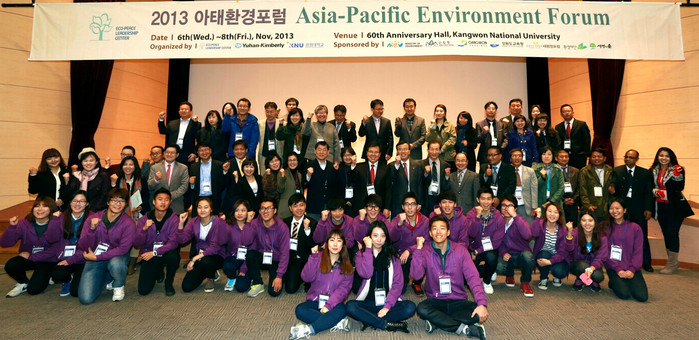 |
| △ 'Asia Pacific Environment Forum 2013' Held at the 60th Anniversary Memorial Hall of Kangwon University in November Last Year |
Asia Pacific Environment Forum 2014 Discusses Sustainable Biological Diversity with 194 Nations
Asia Pacific Environment Forum 2014 is to be held on October 15. For this forum, 5 Korean teams and 10 foreign teams are to be selected. The agenda of the forum has been set - 'The Mainstreaming of Biological Diversity'.
She said, "In reality, advancement in human civilization, such as the development of scientific technology, population growth, industrialization, urbanization, and so on, is accelerating extinction of biospecies, a decrease in the population of them, and ecosystem damage." and added, "The international society recognized the risk of the reduction in global biological diversity like this, and has exerted a cooperative effort to preserve living resources and utilize them sustainably - it adopted the Convention on Biological Diversity with the 1992 United Nations Conference on Environment and Development as a momentum.”
Furthermore, she said, "This event will report the status of biological diversity in the area and seek direction of aggressive policy for preserving it. The event will focus on species diversity and publicize things the area does. We are preparing the event as meaningful project to 190 nations."
Finally, EPLC is to discuss the sustainable biological diversity with the representatives of 194 nations in the world, representatives of international organizations, NGOs by participating with them in a side event of 'The Twelfth Meeting of the Conference of the Parties to the Convention on Biological Diversity' held in Pyeong Chang, Kangwon-do, in the same period.
She emphasized at the end of the interview, "An ostentatious one-off support is nothing more like planting trees in a desert. Self-help centered support helping the local residents stand on their own two feet even after the project is very important. We learned from the project for supplying braziers to Myanmar. Like that, the process where the local residents recognize problems and explore the problem-solving possibilities is essential." [By Park Young Bok at Ecomedia]
[저작권자ⓒ 이미디어. 무단전재-재배포 금지]